Friday, May 15, 2020

15,000,000 American Jobs will be Gone Forever


Economists project that 42% of the jobs we are losing right now are gone for good. That's
15,000,000 jobs. Gone forever. Never coming back. We're dealing with unprecedented
job loss in America right now rivaled only by the great depression. Before the COVID-19
outbreak in the United States, 78% of Americans were living paycheck to paycheck and
57% of Americans couldn’t afford an unexpected $400 bill. The federal reserve projects
COVID-19 job losses to be upwards of 47 million. That's an unemployment rate of 32%.
For reference, the unemployment rate in the U.S. during the great depression was 24.9%
at its peak. In my opinion, now more than ever, America needs to pass a universal basic
income. If the U.S. government won't support giving monthly checks to Americans now,
I fear they never will.

Questions

1. Do you support universal basic income in perpetuity, until the pandemic is over,
or not at all? Why?
2. Do you think the U.S. government will help the people who lost their jobs permanently?
3. What would you do if you were president right now?

Forbes Article

Friday, April 24, 2020

Trump Criticizes Georgia Governor for Decision to Reopen State

Gov. Brian Kemp of Georgia had long resisted statewide stay-at-home measures.


link to NYT article

On Monday April 20th, Gov. Brian Kemp of Georgia (who has resisted statewide stay-at-home orders for a while) declared that he would allow some businesses to reopen on Friday April 24th. Kemp claims to have a plan for reopening the state in the hopes of bolstering the economy, which has indeed suffered a dramatic and devastating downturn. Kemp's plan includes allowing gyms, hair, nail salons, bowling alleys, and tattoo parlors to first open on Friday, then restaurants, movie theaters, and entertainment facilities to reopen on the following Monday. However, his decision was immediately faced with backlash from not only medical experts but also the mayors and business owners of Georgia themselves. Then, on Wednesday April 22nd, President Trump himself declared that he didn't agree with Gov. Kemp's decision and that he thought it was "too soon." Kemp insists that his decision is "driven by data and guided by state public health officials." Furthermore, social distancing is still in place and extra precautions such as masks for employees and monitoring for fevers are in place at the businesses which chose to reopen. At this point, Kemp is not the only governor to seriously consider reopening, as neither Tennessee, Ohio, or Colorado have chosen to renew stay-at-home orders which will expire in the week of April 26th.

Questions:
Given that jobless claims have shot up to over 25 million (the size of the total working population of 25 whole states) in the last 4 weeks, with over 5 million claims filed on just Thursday April 23rd, is reopening the country unavoidable in the near future even if Kemp is early?
Does Kemp's reopening procedure (which businesses open first, etc.) make sense? Should other states follow it or learn from it?
Should Trump and the Federal government step in to prevent other states from opening and/or shut down Georgia forcefully again?


Wednesday, April 22, 2020

CDC Director Warns Second Wave of Coronavirus is Likely to be Even More Devastating


Cases of coronavirus have started to decline and many cities in the United States are slowly beginning to reopen; however, on Tuesday April 20th, the Director of the CDC stated publicly that the second wave of this virus could be even worse than the situation we are currently facing. Covid-19 would resurface in the fall and winter seasons, which is the same time as the flu season; it is predicted that having these two respiratory outbreaks at the same time will lead to even more shortages of care and a significantly higher number of deaths. 

Although the strict "stay-at-home" orders are being lifted, the crucial nature of social distancing will continue to apply in order to decrease the already high risk of the disease spreading. 

Currently, the CDC is in the process of assisting state and local governments in the new phases of reopening and providing guidance for the measures they should be taking. They are also working to help with the task of social tracing, and in their efforts to do so, they have decided to hire more than 650 people - there is also a possibility of Censes Bureau workers along with Peace corps and AmeriCorps volunteers will come together to build an "alternative workforce."

Questions:
1. The CDC recommends that measures such as social distancing or getting the flu shot are some measures that can be taken in preparation for the second wave. What other measures should individuals take to protect themselves from this more deadly second wave? What more should the CDC and/or government do?
2. How should the state and local governments be assisted when it comes to reopening in phases?
3. Do you think that people will continue to engage in social distancing, or will most people go back to their previous habits?

Thursday, April 16, 2020

Why dairy farmers across America are dumping their milk


Link to article


Adjusting the size of dairy herds now could lead to shortages in the future.

Dairy farmers around the world are now watching their milk go down the drain before it even has a chance to be processed into dairy products - more than 3 million gallons each day. Due to the coronavirus pandemic, there has been a severe decline in demand in milk, from schools, restaurants, and other food providers that have closed down to help prevent the spread of the disease. Since cows are the ones producing the milk, it is virtually impossible to stop production, or even slow it down, which has led to a huge amount of excess milk. This shift in consumer demand has been catastrophic for dairy groups since they were already struggling even before the pandemic. Hundreds of thousands of servings of milk have been donated to food banks and homeless shelters to the point where even they have reached their limit with refrigeration space. To help use up the excess milk products, a worker from the Dairy Farmers of America suggests to "add an ounce of cheese to every burger, every taco, every sandwich."


Questions:
1. What are some solutions that you can think of to this problem of excess dairy products?
2. What are some things we can do as consumers to help this issue?
3. Should the government be doing anything to help alleviate this situation?

Wednesday, April 15, 2020

For Prisoners Released Due to COVID-19, a Different World Awaits

Former inmate reunited with family
Inmates enter San Quentin Prison


Thousands of inmates are currently being released from prisons all over America to slow
the spread of the coronavirus in case it enters these facilities. Social distancing is difficult
when incarcerated in an overcrowded prison, so health experts and politicians are taking
these preemptive measures for the collective safety of all prisoners and prison workers.
Those who are nonviolent offenders, disabled, possibly sick, or have health conditions that
put them at severe risk are candidates for release. Recently, Governor Newsom announced
the release of 3,500 carefully selected prisoners in California during April and May, along with
many other states. However, critics of release fear these inmates are potentially dangerous,
proven when one Florida man committed murder a day after his early release.

Many ex-inmates are ecstatic to be reunited with their families during this dreadful time, but
some are alone and lack a home to shelter in. Advocates of mass release worry that the nature
of our new shelter-in-place world will hinder ex-inmates’ access to resources that help them
reintegrate into society. High unemployment rates and increasing difficulty for readjustment
organizations to reach ex-inmates make it intensely more difficult, scary, and confusing to find
housing and employment than it already is for someone emerging from prison. Health care
and Medicaid can also be especially hard to acquire without in-person guidance. Since many
released are elderly, advocates are also concerned for inmates’ access and ability to use
crucial technology. 

Mass release unprecedented, some entertain the idea that it is safer for some inmates to stay
incarcerated because they have daily meals and a place to sleep. People also question the
original plausibility of inmate’s arrests if the government can so easily free them.  In these unusual and unparalleled times, we must consider the balance amongst the safety of all citizens, even if they have broken the law. I agree with the mass releases occurring and of course people will always have assumptions about ex-inmates, but the health of all our citizens must be prioritized. I feel it is less likely for ex-inmates to commit another offense anyway given their previous low-level crimes and the country's state of isolation.


Questions:
1. Do you think the coronavirus will have a lasting impact on the prison system and criminal justice reform?
2. What do you think ex-inmate outreach organizations and services can do to heighten their accessibility, especially to those without ample access to technology?
3. How do you think this mass release will affect low income communities, given the relationship between poverty and mass incarceration and how the coronavirus is hitting low income, minority communities harder?


Thursday, April 2, 2020

6.6 Million People Filed for Unemployment Benefits Last Week

link


With two weeks ago having an unprecedented number of people who applied for unemployment benefits and nearly doubling estimates, last week's numbers proved to be an even greater testament of how deep of a grave the US has dug itself by failing to be proactive with the coronavirus. People applying for unemployment benefits surged to 6.6 million last week, doubling the 3.3 million from two weeks ago and surpassing estimates predicting 4.5 to 5.5 million. It has become evident of how dubious forecasts will be in the time of the coronavirus pandemic, and the big question of how the US economy will do during and after the pandemic still remains.

It is clear that policies will need to be implemented to mitigate damage done to the economy. With more benefits from the $2.2 trillion stimulus bill arriving in the coming weeks, do you think that this stimulus bill will be enough? Do you think the large time gap between now and when more people start receiving these benefits will cause a lot of harm?

One of the greatest factors to Trump's campaign was how well the economy was doing under his administration. Noting that Trump's approval ratings have gone up in the past weeks despite how terrible the economy was doing, how do you think this pandemic will affect Trump's standing in the General Election?


Wednesday, April 1, 2020

Will Covid-19 have a lasting impact on the environment?


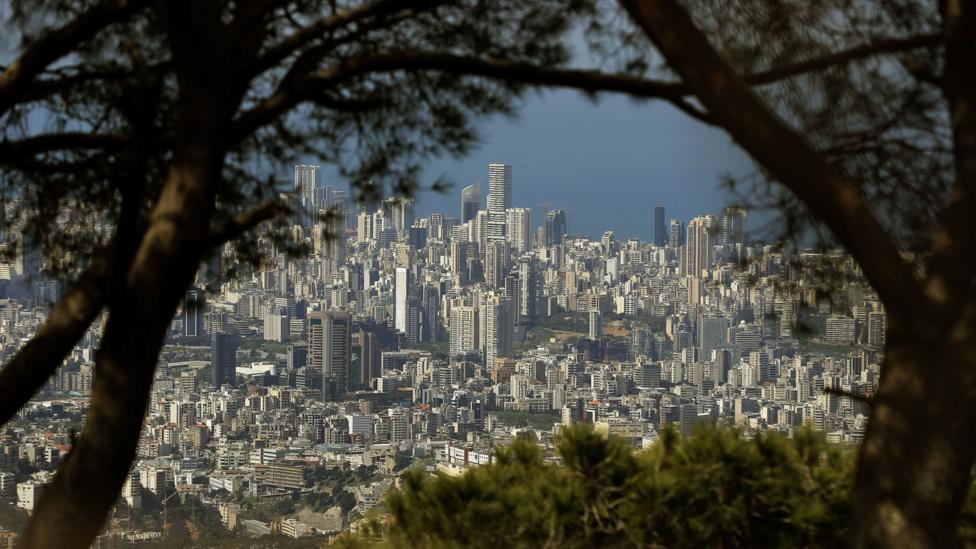
The skies have cleared around Beirut, Lebanon (Credit: Getty Images)
The skies have cleared around Beirut, Lebanon – a city known for high levels of air pollution (Credit: Getty Images)

Article Link

***This article was created March 27th and since it's publishing the number of people who have tested positive for and died from the Coronavirus has increased. In addition, the COP26 conference has been postponed until 2021 and will not be held this November.

     While COVID-19 has certainly made an impact on the population, it has also impacted the environment. Shelter-in-place orders have caused travel to stop and businesses to close, which have reduced carbon emissions significantly. The biggest question is, will we continue to live at a lower rate of emissions, or will be bounce back? Many people no longer have to commute to work, and if they do continue to drive in the future, it's hard to say if they'd be driving more after the pandemic than before. Travel is a big cause of pollution, and it's hard to say whether there will be less travel in the future, or more people will travel to make up for the lost time. In the meantime, animals have returned to areas where tourist have previously drove them out, and there are clearer skies all around the world.
     The fact that we are seeing that it is possible to lower pollution, makes me believe that lawmakers will be able to convince others to create more green policy in the future. We are seeing the immediate response to less emissions, and the Earth is thriving, even though people are suffering.


Questions:
Do you think that now is a good time to talk about and address the climate crisis?
How do you think those who don't believe in climate change would react to the recent decrease in pollution?
What would be the economic impact if individuals continue to act the same once the pandemic subsides?