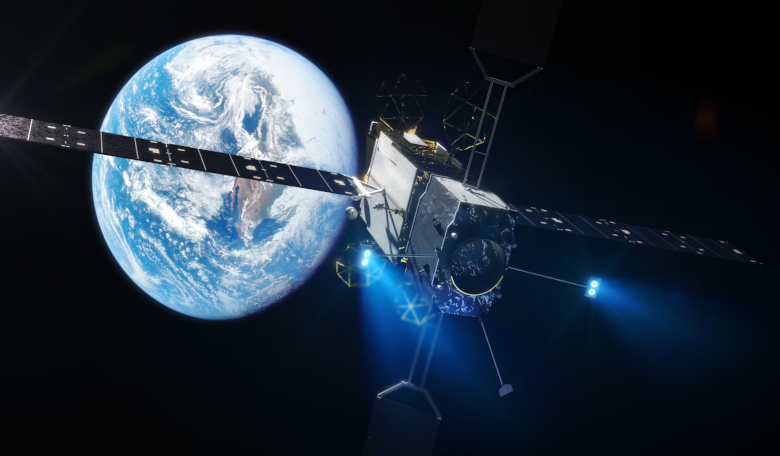
This is a combination of two different events that happened shortly after one another.
Mission Extension Vehicle
https://www.northropgrumman.com/space/space-logistics-services/
https://www.nasa.gov/directorates/heo/NASA_Partnership_Gives_Satellites_a_New_Lease_on_Life
IntelSat 901 was launched in 2001 and now sits in a graveyard orbit, 300km above geostationary. While its radio equipment is expected to remain functional for several more years, its engines are out of fuel for station keeping, meaning the radio equipment is useless. This is where Northrop Grumman's Mission Extension Vehicle, launched aboard a Russian Proton rocket, comes in. It will soon dock with IntelSat, where its extremely efficient ion thrusters will act as the engine in order to make use of the remaining years of service life on IntelSat's radios. Once the radios fail, it can then pull it to a graveyard orbit and attach to a different satellite. This maneuver marks the first unmanned "rescue" of a satellite, previously done by an entire Space Shuttle with a crew of three astronauts. It is also interesting that such experimental technology would be launched aboard a Proton rocket rather than an American rocket.
Axiom Space
https://www.nasa.gov/press-release/nasa-selects-first-commercial-destination-module-for-international-space-station
https://techcrunch.com/2020/01/27/nasa-taps-startup-axiom-space-for-the-first-habitable-commercial-module-for-the-space-station/
From 2024 to 2028, Axiom Space will send up a series of four modules to the ISS before detaching them, creating their own space station. The Axiom modules differ significantly from existing ISS modules in that they include a luxurious habitation space and viewing deck, meant for space tourists rather than scientists. The launch will be significant for another reason too: it marks the first time a space station will assemble and launch another artificial satellite.
These two missions may be part of the beginning of the second phase of space exploration. We are not just reaching into space but taking the first steps towards establishing a permanent presence: being able to repair and build structures in space. This is similar to the way that colonists followed explorers into the New World.
1. What is the role of the government in science? Should they be involved in routine procedures such as putting up communications satellites or servicing space stations? Should they be focusing on new research that is not necessarily profitable?
2. What reasons might a commercial company have for pursuing scientific missions?
3. Should space be commercialized? How is the balance between environmental and commercial interests determined on Earth? Is space debris an environmental issue?
4. What did farmer John say when his neighbor asked him if he had enough crops to feed his family?
"There's barley enough."


