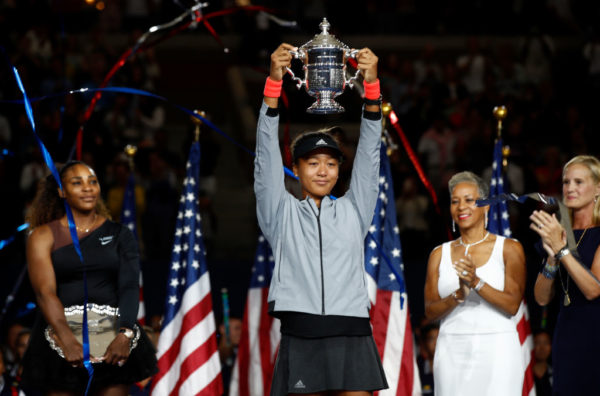
During and after the match, Williams claimed that she was being treated this way because she is a woman. The CEO of the USTA has agreed that there are double standards in tennis, as some men have berated umpires worse than Williams and not faced as severe of repercussions.
I think that both Williams and the chair umpire, Carlos Ramos, could have handled the situation differently. Ramos involved himself in the match too much; even though he was following the code, in such a high stake match, warnings are more common than violations. After the first or second violation, he could have told Williams that if she didn't lay off, he would have to take further action. Williams also let her passion get the best of her. It's important to recognize that she was standing up for her principles, but she knows that the umpire has a lot of control of the match. While this incident was more out of control than most, it definitely highlighted double standards in the sports world.
Do you think that the chair umpire was being gender-biased? Did they both let the situation get out of control? Did Serena face appropriate consequences?
Article link
Coaching Rule

I think it's difficult to determine whether or not the chair umpire was being biased without knowing more information about him and the situation. However, this is reminiscent of another recent story of bias in tennis where a female player removed her tank top as she realized it was inside out and fixed it. She was reprimanded by the chair and many noticed that men remove or adjust their shirts frequently in tennis and rarely experience the same punishment. However, it is common for women who speak out aggressively in sports to be reprimanded more harshly. Generally, the public tends to perceive a man who defends himself as passionate or strong while a woman who does the same is deemed difficult or rude. Double standards exist not only in tennis and sports but in society as a whole.
ReplyDeleteI do think that the chair umpire was being gender-biased. Both Williams and Ramos could have handled the situation differently. Serena let her passion get to her and the chair umpire made rash decisions that made a huge impact on a very important game. Due to the importance of the game, the actions of the chair umpire should not have been as harsh. I think the way Serena acted was more understandable, for her adrenaline is rushing and a lot is at stake. If this game was played by males, I don't think the chair umpire would have acted the same because "boys will be boys" and their misconduct is tolerated more. The double standard was really highlighted in this game, and I hope that more attention is brought to this issue because it does not just happen in tennis.
ReplyDeleteThis comment has been removed by the author.
ReplyDeleteCarlos Ramos was not gender-biased as he is known for his strict officiating. An example of his strict officiating was during the 2017 French Open when he gave Djokovic a time violation on his serve and later a code violation for him yelling. Although Ramos was excessive during the women's final, he officiated within the rules of tennis. Both Ramos and Williams are responsible for letting the situation get out of hand. Williams should have kept her composure after she had received her warning. Ramos should have communicated more effectively with her to clear up the confusion regarding why he gave her the soft warning. Williams faced appropriate consequences as she was fined $4,000 for the coaching violation, $3,000 for racket abuse, and $10,000 for verbal abuse.
ReplyDeleteIn my opinion, Carlos Ramos was not being gender-biased. It may have been a stretch for Williams to argue that because she is a woman, Ramos was making these rulings. As an athlete, I know referees may be difficult to deal with especially when they make calls against you, so Williams may have overreacted about Ramos' violations. Carlos Ramos did make harsh calls in giving the game to Osaka, but he was being a strict umpire abiding by the rules of tennis. They both could have dealt with the situation differently: Carlos Ramos could have given more warnings, and Williams could have been more careful during the game to avoid these violations. However, I do not think that the umpire was being gender-biased.
ReplyDeleteI think that the media has been apologetic and making excuses for Serena. I think that the umpire was not gender-biased because he has a track record of penalizing men in crucial games as well (Here is a link of everything Ramos has done http://larrybrownsports.com/tennis/umpire-carlos-ramos-history-code-violations-serena-williams/463180). The issue here is not a black woman being oppressed by a white man. The issue is a global icon who lost composure and tried to blame it on a ref. Serena was going to lose whether or not she got penalized. I feel bad for Naomi Osaka because she played an incredible match and her win was not only the first grand slam win of her career but for the country of Japan as well. Serena has shifted all the focus of how great Osaka played to the non-existent issue of Ramos being a sexist referee.
ReplyDeleteI agree 100% with everything you said.
Deletethe referee was not being gender bias. as pointed out by richard he has a history of being a strict referee and giving out violations in many high stakes matches. As an athlete it is important espically in high stakes situations, games and matches it is important to keep compose and Williams did not keep composure. Ramos did what he thought was neccessary in that situation.
ReplyDelete
ReplyDeleteI do not believe that the umpire was being gender-biased, but rather that he was drawing appropriate consequences to both Serena's and her coaches' actions. As well-known professionals, Serena and her coach should be well aware of the strict rules of the US Open. However, by repeatedly coaching Serena from the sidelines, the coach was clearly violating the outlined rules (as later proved by video evidence). Even after being warned multiple times, he continued to exhibit unprofessional behavior through indirect coaching which resulted in penalties for Serena. Yet instead of accepting this and continuing to play in a professional manner, Serena let her passion get the best of her. It was completely inappropriate to insult the umpire as a "thief," while also continuing to question his decisions. I believe that the umpire generally handled the situation well, and it was Serena and her coach who were at fault for exhibiting very unprofessional and disrespectful actions towards not only the umpire, but also the general rules of the US Open.
Personally, I do not think that gender bias played a role in this incident. Although the ruling was extremely harsh, his decision was not against the rules. Both sides were wrong, as the referee's decision was too extreme in such an important match, and Serena Williams should have attempted to stay professional, knowing the gravity of the situation.
ReplyDeleteBased on the umpire's previous record of adhering strictly to the rules, it does not appear that gender was a significant factor in his actions. The media wants a more interesting story to tell and gender biases/double standards are hot topics that get people fired up. Most likely the media wanted a good headline and to victimize the American. However, Serena Williams does make a valid point when she brings up the double standard for women in sports, as women have been reprimanded harshly in the past for being aggressive in the world of professional athletics (and in society as a whole).
ReplyDeleteEmma Madgic ^
DeleteThe referee was not being gender biased. Serena Williams lost and that's that. From other articles, it seems that the referee has penalized male players equally. In the world of competitive sports, especially for players at the caliber of Serena Williams, she should have stayed composed. The referee had every right to penalize and take away a game from Serena Williams, she was lucky she was not suspended. In other racket sports, you get one warning and a second warning would mean you are disqualified (not from the game, but the entire tournament). Blaming the loss on sexism is just an excuse. shes literally ego boosted
ReplyDeleteI agree with those above who state that the referee was not being gender biased. The referee was simply doing his job in order to keep the game fair and regulate the game utilizing his power. Moreover, Serena cannot blame the loss of the game on the referee. In many other sports, one cannot simply blame the referee because they lost. Athletes lose games because of the way they play; therefore, if she would’ve played better earlier or after her violations, she wouldn’t have to deal with the referee and implode the situation as well as basing his arguments on being gender biased. Nonetheless, I also believe that not only Serena let the situation get out of hand but the referee did as well. Although punishments for violations affect one’s attitude within any competitive event, the referee should have understood that players get heated within the moment and should have given Osaka another point rather than a full game. Moreover, the referee’s argument for breaking the coaching rule is somewhat flawed as, like Williams’ coach said in the article, many other people could have also been coaching Serena, and many other people, including Osaka’s coach, could have been coaching Osaka. However, Serena also blew the situation out of proportion as she violated at least the rule against racket breaking. Therefore, she should have been willing to face a simple punishment without getting heated. Ultimately, I believe Serena has a point in saying that she may not have deserved her punishments, but her argument that the referee was being gender biased is flawed because Osaka is also a girl or a different ethnicity than the referee as well. Finally, I believe that Ramos is not gender biased, but both the player and the umpire let the situation blow out of proportion which may have been the cause to Serena’s consequences.
ReplyDeleteI don't think that there is enough evidence to say definitively that the reef was gender-biased or not, but it is also difficult to find definitive evidence of gender-bias in a case like this. I think that there is a good argument to be made that Serena should not have been confronting the reef like she was, but it is completely understandable, as this was a high stakes match and she must have be very stressed. I also think that it is important to solve the greater issue of gender-bias in the tennis league.
ReplyDeleteGender bias had absolutely nothing to do with this incident. While the double standard may or may not exist, both sides in this match were judged by the same referee, and so were held to the exact same standard. I think that Williams was trying to get away with something that she shouldn't have gotten away with, and after she was shut down and punished, she's now trying to bring in controversial political topics to try and cover up for her gamble. Her blaming the loss on a double standard is a demonstration of extremely poor sportsmanship, and instead takes away attention from Osaka's first Open victory.
ReplyDeleteI don't think that we can definitively say that there was gender bias here. This particular referee is known for being a stickler for the rules, so that's one aspect of it. If it had been someone who has let this slide on multiple occasions in the past, then it might be a different story. Possibly Serena didn't know the referee's past, so she thought this would slide as it may have in the past for her, and was surprised when it didn't. What she did is a clear violation for the rules, but is over something that is looked over. But I do believe that it's true that many men have done worse to referees in the past and have either not gotten punished or punished not as severely as Serena did. As said in the article, "Roger Federer was fined just $1,500 for a berating an umpire with an expletive during the 2009 U.S. Open," and in comparison Serena's punishment was much more drastic. I do believe that this situation could've been diffused by either parties and didn't have to come to this. Either the referee could've not escalated the situation as much or Serena could've not gotten as heated as she did.
ReplyDeleteI don't think that there is enough evidence to say there is a gender bias; however, this case does bring up some points about having gender bias. Throughout tennis there are some things that are usually overlooked and were not this time, like coaching to some extent. But I also think that the reaction that Serena had was uncalled for and the combination of the rulings and Serena together took away the victory for Osaka's win. This whole controversy made it so that there wasn't any winner and she felt ashamed for winning when she was only trying her best and did play a good game.
ReplyDeleteAs like everyone else, I agree that the umpire wasn't being biased to gender. Just like what Stan said, it was a double standard for both players. I think that Serena just took her emotions out of hand and instead of blaming on her performance, found something else she wanted to put blame on. Osaka played very well and deserved that win. While Serena may not have deserved that big of a fine, she was very unsportsmanlike and instead of putting blame on the umpire, she instead should've made the professional decision to congratulate the opponent on a good game and move on in my opinion.
ReplyDeleteWhile Ramos' rulings during the match could be considered harsh taking into account the occasion, they were certainly fair, well within the rulebook. Like most people, I don't think this has anything to do with double standards regarding gender. Serena took it too far with her confrontational manner toward the umpire. Personally, having watched all of the top players, I've never seen anyone get so personal and aggressive with the umpire. Regardless, there are certain aspects of tennis that can be seen as unfair regarding gender. For example, also at the same tournament, another female player, Alize Cornet, was given a code violation for changing her shirt on the court, while most men are allowed to do that. Tennis has come pretty far in regards to gender equality; this particular case with Serena has nothing to do with it, but there are opportunities to continue progressing forward
ReplyDelete